
GISD Therapy Dog Brings Comfort, Connections
At the Williamson County Juvenile Justice Center, many students arrive carrying the weight of significant trauma. Emotional dysregulation is common—some pace, raise their voice, cry, or retreat into silence. Tara Stewart, principal of the S.T.E.P program, recalls one girl who, at her previous school, could remain dysregulated for up to two hours. After transferring to the center, staff were able to help her calm down in 45 minutes. The next time, when the school’s therapy dog Luna Raptor was present, it took just five.
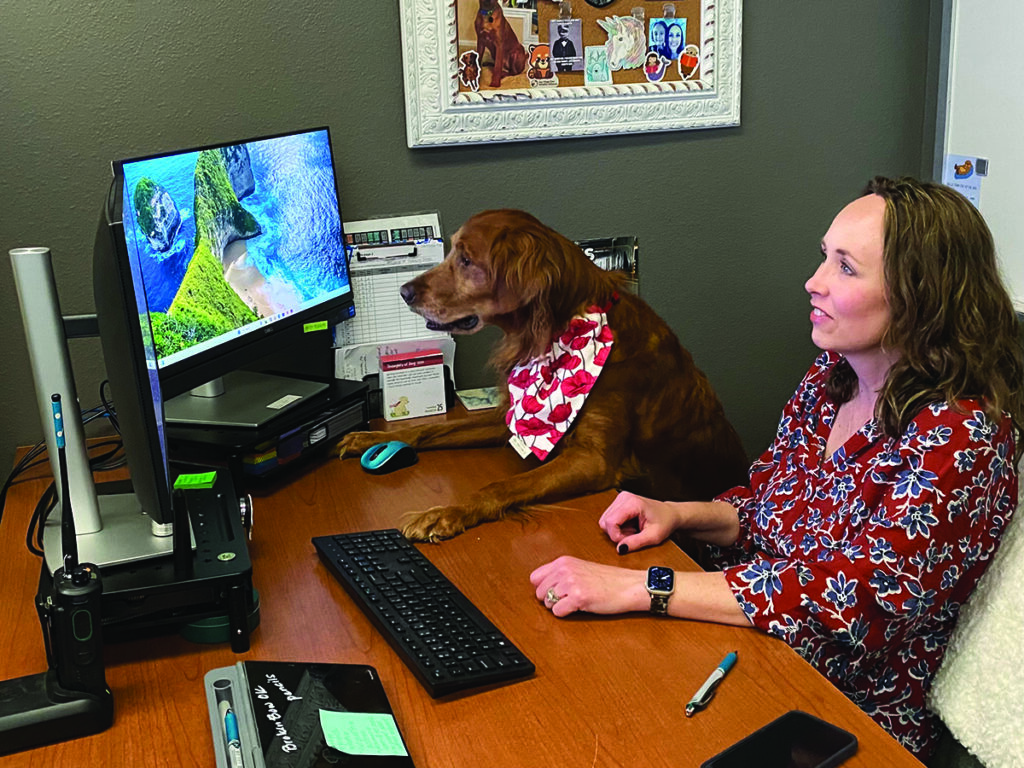
Luna, a 6-year-old golden retriever, has been a certified therapy dog through Alliance of Therapy Dogs since she was 2. Tara originally began training another one of her dogs with a different mission in mind—helping wounded soldiers who had fought in The Global War on Terror. But when Tara joined the juvenile justice center, she recognized this campus, too, was a place where calm, unconditional love could make a difference.
The staff, who had long been interested in bringing a therapy dog to the campus, were quick to welcome Luna to their team. Her name, inspired by the gentle and good-hearted Luna Lovegood in the world of Harry Potter, reflects the role she plays at the center—offering comforting, non-judgmental support to students and staff alike.
Now in her fourth year at the center, Luna supports students across all three educational programs housed within the facility: the short-term detention program, the long-term residential treatment program, and the Juvenile Justice Alternative Education Program for kids who have been expelled from their home campuses. Students are elementary through high school age, with some pursuing a GED.
DOG’S-EYE VIEW OF HEALING
When Luna walks into a classroom, she doesn’t need to be told where to go—she instinctively gravitates toward the student who needs her most. Whether it’s locking peaceful eyes with someone having a hard time, or lying across a nervous kid’s feet when they first arrive at the juvenile justice center, Luna knows exactly what each student needs at that moment. “I like that Luna knows when people are down and tries to help,” one student wrote in a school letter. Another note read, “She makes a smile appear on my face and maybe she understands better than a human.”
Another girl, who came to the center terrified of dogs, now lights up whenever she sees Luna and shouts her name across the hallway. One student, disappointed whenever his dad failed to show up for a scheduled furlough visit, would sink to the floor and bury his face in Luna’s fur.
Those kinds of encounters are backed by science—research shows therapy dogs can increase serotonin, reduce cortisol, and lower the heart rate and blood pressure. In a high-stress environment like the juvenile justice center, those effects are transformational. Tara says, “I love watching other people’s faces and seeing how happy she makes them.” So much so that she doesn’t mind being called the Dog Lady whenever she and Luna are out and about. “And they say Luna’s name first. I’m secondary,” she laughs. As one of her school shirts says, “I’m the one who’s just here to hold the leash.”
PAWPRINTS ON THE HEART
Beyond the juvenile justice center, Luna brings the same healing presence to events throughout the school district. She attends the State of the District and other GISD events, joins Zoom meetings, appears in public service announcements (like safety reminders about wearing eclipse glasses), and dresses up for school spirit days. On Valentine’s Day, she stars in the school’s Kissing Booth, where students get to line up for pictures with her. She even serves as a recruiting tool, with applicants sometimes responding to job postings simply because they saw that the center has a therapy dog.
But even with her growing public presence, Luna’s greatest impact is felt in the day-to-day connections she builds on campus—with students and adults alike. “She definitely is on call for the kids. But the adults use her just as much,” Tara says. “She’s everybody’s favorite employee.” Juvenile Services Executive Director Scott Matthew says, “She’s got the best job in the world. She makes everybody smile.” Tara agrees, saying, “It’s very obvious that she finds joy in her work. She’s so excited to come to work every day. In the summer, when her teachers aren’t here and she doesn’t get to see all the kids as often, she almost gets depressed. We have to go and find kids to help her.”
Click here to follow Luna’ campus adventures on Instagram.