
Thirty-one years in public service taught Judge Steve Snell that leadership means showing up—especially with things get tough.
In the spring of 2025, after 11 years as superintendent of Liberty Hill ISD, Steve Snell was preparing to retire. He and his wife, Amy, were praying about a simple question: How can God still use me?
Serving as County Judge had never been part of Snell’s plan, but after Judge Bill Gravell resigned to work for the Trump administration, Steve studied the role and the work looked familiar: bring people together, prepare for emergencies, manage growth, protect public resources, and make decisions with consequences likely to be felt for decades.
“I feel like my entire career led to this point and prepared me to do the job,” he says. “As weird as it sounds, I really do think God put me in this place for a reason and wants me to serve people as best I can.”
SERVICE BEYOND THE BUDGET
Since taking office in April 2025, Snell has approached the position as another form of public service. The work takes place in Commissioners Court and budget meetings, but its purpose is found beyond those rooms: in the deputy answering a dangerous call, the family stranded in traffic instead of gathering around the dinner table, and the child who will inherit the community being shaped today.
Public safety is not just a budget line to Judge Snell. It means ensuring people who run toward emergencies have the staffing and support to do their jobs. The county’s 2026-27 budget added 47.5 full-time positions, nearly half in public safety, and includes $1.05 million for law-enforcement raises.
His regard for those officers also appears in quieter moments. On Law Enforcement Appreciation Day, Snell helped provide barbecue and stood behind the serving line, handing meals to Sheriff Matt Lindemann (above) and all the Williamson County deputies. It was a small gesture beside the scale of county government, but it revealed something spreadsheets don’t: gratitude expressed personally.
WHEN THE WATER ROSE
The devastating July 2025 floods put that experience to an immediate test. Three people died in Williamson County, while homes and RV parks were badly damaged. Judge Snell helped direct the county’s emergency response, but he was also boots on the ground in affected communities, working alongside responders and residents as rescue evolved into cleanup, recovery, and repair.
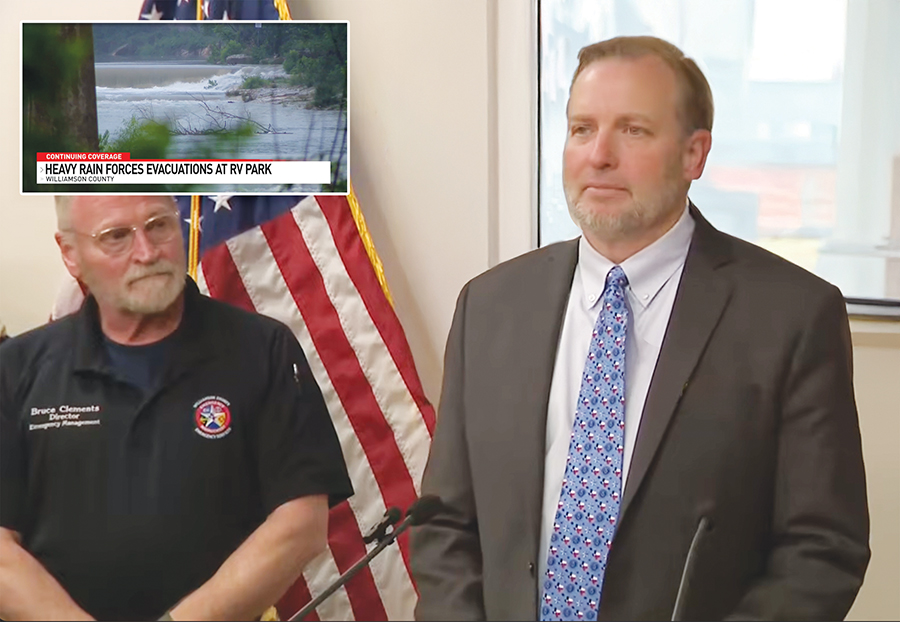
“One thing I’m very proud of Williamson County is we took immediate action,” the judge says. Afterward, he partnered with the Central Texas Community Foundation to establish the WilCo Cares Fund, helping displaced residents meet urgent needs and begin rebuilding. He also joined Central Texas leaders testifying before state lawmakers about emergency preparedness, infrastructure, and better flood-warning systems—carrying the lessons learned on damaged Williamson County roads and riverbanks directly to the policymakers.
WILCO IN THE FUTURE
Rapid growth presents a slower-moving version of that challenge. Williamson County’s population is expected to double over the next 25 years and Judge Snell has lived that transformation before. As superintendent, he guided enrollment growth from about 4,000 to 11,000 students and oversaw more than $1 billion in building projects.
Every new school represented children who needed a classroom before overcrowding became a crisis and county planning works the same way. Roads must be planned before traffic overwhelms a community. Emergency services must grow before response times suffer. Water must be secured before families and businesses discover there is not enough.
“As superintendent, you’re locked into the success that they’re building,” Judge Snell says. “Now I get to do it on a bigger scale for so many other communities.” Under his leadership, the county has continued long-range transportation planning and secured approximately $131 million in federal funding for roadway and trail projects. For him, mobility is about returning time to people whose evenings should belong to their families, not to congestion created because government failed to prepare.
Judge Snell is looking even farther ahead on water. He spearheaded a $500,000 study of existing supplies and future possibilities, including groundwater, reuse, and regional partnerships. “I want to make sure we’re securing water for the next 50 years,” he said.
His education career also shaped a collaborative style he summarizes in three words: “Communication, communication, communication.” Today, he works with elected officials, department leaders, and municipalities whose cooperation is essential to a county too complex for anyone to lead alone.
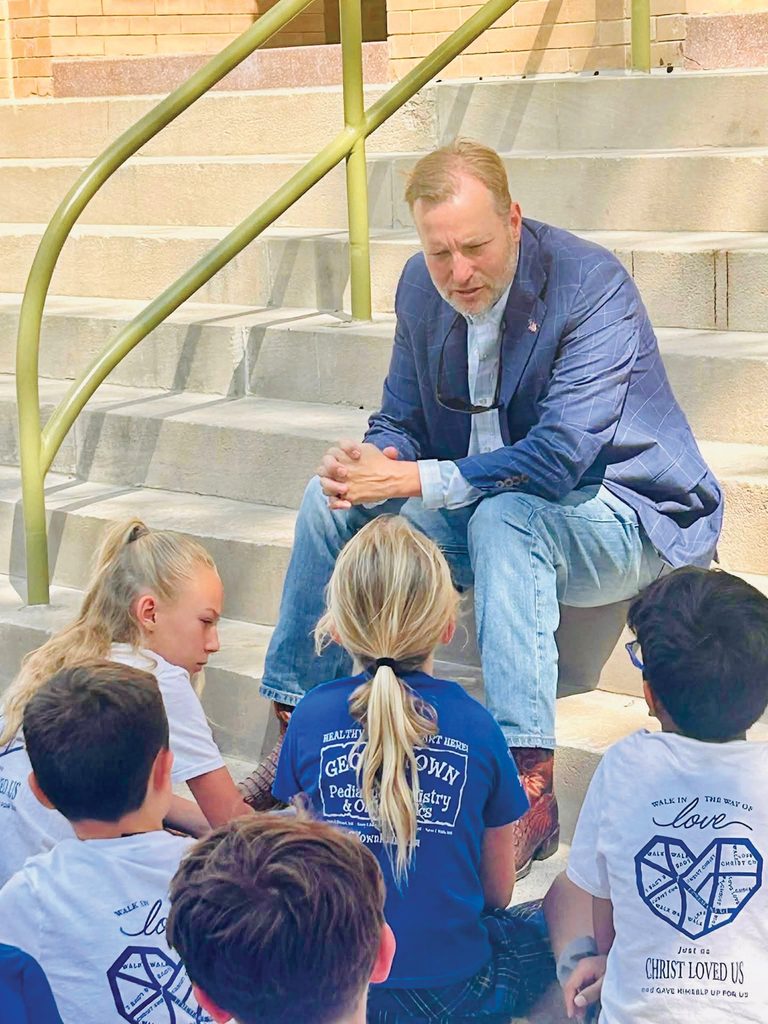
Still, the most revealing images may be the least formal: talking with schoolchildren on the courthouse steps, celebrating a new community library, or sitting beside a local veteran. He and his wife Amy recently celebrated 30 years of marriage and remain active at Celebration Church in Liberty Hill. “We live here, eat here, play here,” he says. “Community service—it’s in my DNA.”
Steve Snell was appointed to complete an unfinished term. Now he is asking voters for the opportunity to continue work already underway. As voters consider who should lead Williamson County, Judge Snell hopes they will look beyond the title to the responsibility he has already made his own.