
Peril, Passion, and Prestige
by Linda Thornton
Texas pays homage to its traditions—and competitive nature—even when it means riding a one-ton, aggressive animal.
Described as “a wild brawl between man and bull,” the sport is also known as bull riding.
The ranching culture of the original 16th-century Mexican cowboys called vaqueros (vaca is Spanish for cow) evolved into informal competitions between Texas cowboys showing off their resilience on aggressive bulls.
Soon, organized events showcased these exuberant contests, with the first official rodeo held in Pecos, Texas, in 1883. The rodeo was named Texas’ state sport in 1997. Today, the thriving industry is an integral part of the state’s economy and remains a symbol of the American West, with bull riding as its main attraction and, often, the rodeo’s grand finale.
IT’S SAFE TO SAY, BULL RIDING IS ONE OF THE MOST DANGEROUS SPORTS IN THE WORLD!
HOW IT WORKS
- Bull riding competitions take place over several nights. Riders ride a different, randomly selected bull once each evening.
- The rider mounts the bull in a small enclosure called a bucking chute. The bull is held steady, and the chute isn’t opened until the rider gets a good grip.
- The rider must stay on the bull for eight seconds.
- If the rider’s free hand touches the bull during the ride, he is disqualified.
- Riders and bulls can earn a total score of 50 points each. Riders are judged on balance, control, and style, while bulls are scored on their level of bucking, kicking, and spinning ability.
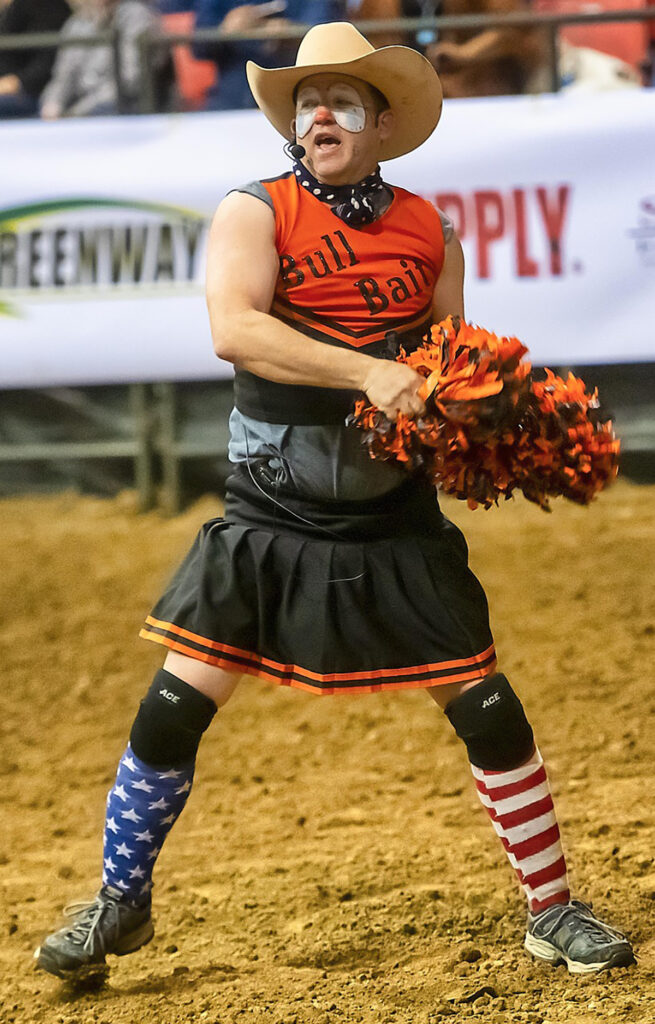
- Should a rider be thrown off the bull, rodeo clowns are in the ring to distract the bull until the rider is safe.
- The top twenty scoring riders ride again on the last night. The winner is the rider with the highest collective score.
THE RIDER OR THE BULL: WHO’S REALLY THE STAR OF THE SHOW?
HIGH RISK RIDER
The rigorous training, travel, and recovery make professional bull riding a way of life, rather than an occupation. Children of rodeo families grow up traveling to events, become immersed in the lifestyle, and see it as a natural path.
The life of a bull rider consists of cultivating and maintaining the necessary physical and mental prowess and gaining experience in rodeo sports and bull behavior. Many join a professional organization such as the Professional Bull Riders (PBR), and obtain mentors and sponsors, while making sure to score enough prize money to advance.
Most riders end their careers in their mid 30s, but those who have made their mark have remained in the industry as commentators, coaches, and in league management.
AUSTIN RICHARDSON, RISING TALENT
At 19, Austin was one of the youngest riders to ever qualify for the PBR World Finals. From riding goats at a young age, he slowly turned to bulls and became professional at age 18.
Now 25, the Dallas native says injuries come from being unfocused and he’s thankful he’s only suffered a broken finger.
THE AMERICAN BUCKING BULL is AN ELITE BREED OF CATTLE
Weighing in at 1,500–2,000 pounds, these bulls are considered high-performance athletes and are professionally ranked, just like their riders.
Their muscular build and temperament are suited for the sport. They have been trained to perform for a crowd and know they are competing. Special genetic lineage bred into these bulls gives them their bucking instinct and ability. Since a bull’s skin is seven times thicker than human skin, it can withstand the dull spurs that riders use to grip for balance.
Some bulls achieve legendary status and live a lavish lifestyle with their own dedicated ranches, social media platforms, and the knowledge that if there’s going to be an injury in the arena, chances are it will not be theirs.
YOUR FIRST RODEO?
- Covering: Staying on the bull for all of eight seconds.
- Rank: A term of praise for a bull that’s especially powerful and difficult to ride.
- Slap: When the rider’s free hand touches the bull during the ride, resulting in disqualification.
- Spurring: A motion where the rider’s feet make contact with the bull, a key technique for staying balanced and scoring.
- Remember to show your excitement with a “Yee Haw!” or “Covered it!” to celebrate a rider staying on for eight seconds.
DON YOUR HAT AND BOOTS AND HOOF IT TO THE RODEO
Bring the family and celebrate all things rodeo! Livestock shows, live music, and carnival attractions surround the featured excitement of watching cowboys, cowgirls, and even children, who have their eyes on the prize, compete for cash and kudos.
Mark your calendars for Rodeo Austin March 13-28, 2026 at the Travis County Expo Center. The next Williamson County Fair & Rodeo will be October 2026 at the Williamson County Expo Center in Taylor.
Wilco Fair and Rodeo • WilcoFair.com/p/thefair/rodeo
Rodeo Austin • RodeoAustin.com/fair-rodeo/rodeo-concerts/prorodeo/