
GISD Culinary Students Cook Their Way to Nationals
When most people think of cooking competitions, they might picture high-stakes pressure, fierce competition, and Gordon Ramsay-style yelling. But inside the kitchen at Georgetown ISD’s Future Ready Complex, the atmosphere couldn’t be more different. “There’s no yelling. No one learns when they’re afraid. You may perform but you’re not really learning,” GISD Culinary Arts Instructor Emily Jimenez says. Instead, she fosters a space where students are encouraged to grow through constructive feedback and practice. While her students aim for excellence, the emphasis isn’t on winning. “We do not talk about winning,” she says. “Your value should come from the pride you take in creating a great plate.”
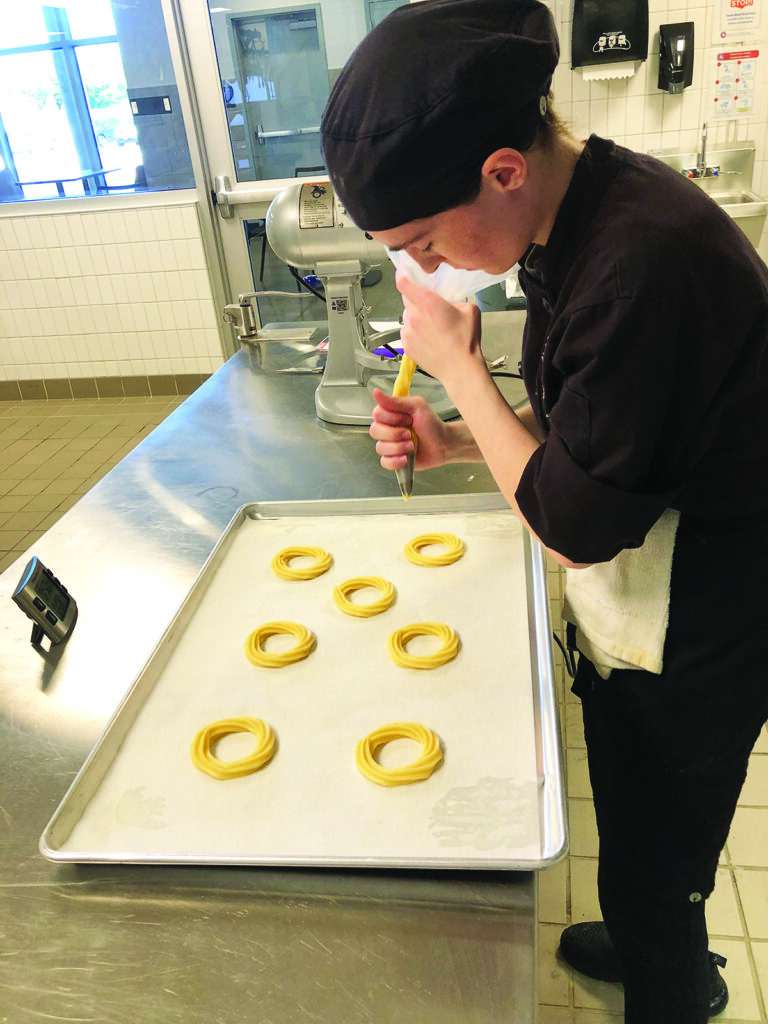
That calm, supportive teaching style is perhaps one of the reasons her students have won at regional, state, and national culinary competitions for the last five years in a row. “She makes the program so fun. It’s not stressful. It’s something I enjoy,” Avery Droby says while stirring a pot of cream for a Paris Brest (right), a donut-shaped French pastry filled with cream. As a recent East View High School graduate, she will compete alongside two other EVHS graduates—Maddy Card and Hope Searcy—at this year’s Family, Career and Community Leaders of America (FCCLA) Culinary Arts Competition on July 5-9 in Orlando, Florida.
RISING TO THE CHALLENGE, PLATE BY PLATE
On a weekday morning in June, while other students are enjoying their summer vacations, Hope is at the Future Ready Complex, perfecting her Greek salad for the savory meal category. Meanwhile, Maddy and Avery are preparing for the baking and pastry event by making sugar cookies, lemon poppy seed muffins, a decorated cake, and a Paris Brest. While Hope has also been practicing for the competition at home, she prefers the complex’s spacious, fully equipped kitchen. “I don’t have kids running around everywhere like at my house,” she says with a laugh. In addition to the salad, her menu features chicken piccata, orzo pilaf, and sautéed green beans—dishes that require extensive prep work. “So many things to chop, so many lemons to zest and juice!”
It makes her especially grateful for Chef Emily’s guidance throughout each cooking practice. Faced with a thick chicken breast at one point, she asks her instructor for advice on the best way to cook it. “If they give you a really petite chicken breast at the competition, I would tenderize it. If they give you a big fat one, butterfly it,” Chef Emily says. “That’s the hard thing,” she shares. “They give us the menu, but they don’t tell us what kind of chicken breast there will be. I try to keep them flexible and give them problem-solving skills so they will be prepared.”
What sets GISD’s Culinary Arts program apart is its focus on fundamentals. Students don’t just follow recipes, they master techniques tailored to each menu. If a dish calls for julienned vegetables or uniform quarter-inch cuts, they meticulously meet those standards.
Presentation is equally important, with students learning how to elevate simple ingredients into beautifully plated dishes. But success in this competition isn’t just about turning out aesthetic meals. Judges evaluate everything from cleanliness to professional appearance—no perfume, minimal makeup, tidy uniforms, and spotless workstations.
The journey to nationals has been no easy feat—it’s the result of months of dedicated practice.After advancing from regionals in Corpus Christi to the state competition in Dallas, the trio placed first or second in their categories, earning the chance to represent GISD on the national stage. After the competition in July, their hard work will be celebrated with visits to the Kennedy Space Center, Universal Studios, and a waterpark.
A RECIPE FOR REAL-LIFE CONFIDENCE
The impact of the culinary program goes far beyond the kitchen. At the Future Ready Complex, juniors and seniors from across the district dive into high-level cooking, building on the foundational knowledge they develop during their freshman and sophomore years at their home campuses. The program mirrors real industry environments, preparing students to work in any kitchen—from a local café to a major hotel restaurant—with confidence. Some students, like Maddy and Avery, plan to continue in the field. Maddy is heading to the Culinary Institute of America in San Antonio to study pastry and hopes to open her own bakery one day. Avery plans to study food science at Texas A&M. Others, like Hope, who is pursuing child advocacy at BYU–Idaho, are taking their culinary experience into other fields. But all three credit the program with shaping their confidence, professionalism, and ability to handle pressure. “It’s really a life skills class,” Hope says. “It’s helped me in job interviews and taught me how to interact with people and how to lift others up.”
Keep up with Hope, Maddy, and Avery’s journey at nationals by following GISD_Culinary on Instagram.