
Platelet-Rich Plasma, commonly known as PRP, is part of a growing field called regenerative medicine — treatments designed to support the body’s natural healing processes rather than simply masking symptoms.
PRP begins with a routine blood draw. The sample is placed in a specialized centrifuge that concentrates platelets and the growth factors they contain. These platelets carry biologically active proteins that help regulate inflammation, stimulate tissue repair, and promote collagen and blood vessel formation. When injected into an injured joint, tendon, skin, or scalp, PRP signals the body to amplify its own healing response.
Today, PRP is used in several areas of medicine. In orthopedics and sports care, it is commonly used for tendon injuries such as tennis elbow or Achilles tendinopathy, ligament sprains, mild to moderate osteoarthritis, muscle strains, and chronic overuse injuries. In aesthetics, PRP is often paired with microneedling for facial rejuvenation, acne scars, fine lines, and improved skin texture. It is also used in hair restoration to support thinning hair in both men and women. In select cases, PRP may be incorporated into broader men’s wellness treatment plans.
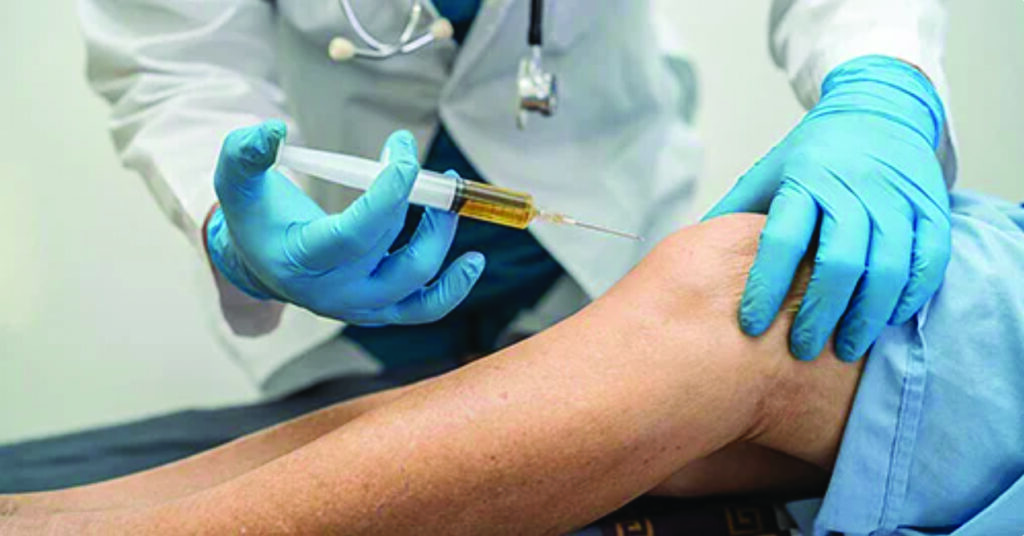
Unlike steroid injections or anti-inflammatory medications, which primarily reduce pain, PRP aims to stimulate tissue repair at the cellular level. Surgery repairs or replaces damaged tissue through a more invasive approach. PRP, by contrast, is minimally invasive and uses a patient’s own blood, making it well tolerated and appealing to those seeking restorative options.
PRP is not a cure-all. It tends to work best in patients with mild to moderate joint or tendon injuries, early osteoarthritis, or hair thinning where follicles remain active. It may be less effective in advanced arthritis or in individuals with certain blood disorders or active infections. Overall health, age, and how long an injury has been present can all influence results.
A typical PRP appointment lasts about 45 to 75 minutes. After confirming candidacy, blood is drawn and processed. The concentrated PRP is then injected into the targeted area — often with ultrasound guidance for precision. Mild soreness for a few days is common and usually reflects the body’s healing response.
Results vary by condition. Joint and tendon patients often notice improvement within four to six weeks, with continued gains over several months. Hair restoration patients may see reduced shedding within two months and visible thickening by three to six months. Some individuals benefit from a series of treatments spaced several weeks apart.
As interest in PRP grows, choosing the right provider matters. Patients should look for experienced medical professionals who tailor preparation and technique to the diagnosis rather than using a one-size-fits-all approach. At Prime Wellness & Longevity, PRP therapy is delivered with that precision. The clinic uses advanced dual-spin technology to optimize platelet preparation and integrates PRP within a broader wellness strategy that addresses inflammation, lifestyle, and overall health. For those exploring regenerative options, Prime Wellness & Longevity offers a medically guided setting to determine whether PRP is the right fit.
For more information about PRP locally, visit: PrimeWellnessandLongevity.com 512-240-4456
Prime Wellness and Longevity
Personalized hormone therapy, weight loss, and wellness plans to help clients optimize health, boost energy, and feel their absolute best.
PrimeWellnessandLongevity.com · 512.240.4456