Bringing Books to the Block
They look like tiny houses on posts—brightly painted boxes in front yards, outside schools, and along park trails—each filled with books waiting for their next reader. These Little Free Libraries turn ordinary spaces into miniature neighborhood book hubs designed to bring libraries even closer to the people they serve. What started as one small project in a Wisconsin yard has since grown into a global network dedicated to sharing stories and expanding access to reading.
LITTLE LIBRARY WITH A BIG IMPACT
The first Little Free Library was built in 2009 by the late Todd Bol, a former teacher in Wisconsin. Todd constructed a small wooden box modeled after a one-room schoolhouse and mounted it on a post in his yard—a tribute to his mother, a teacher and avid reader. He filled the miniature library with books and invited neighbors to borrow them freely. The concept was simple: “take a book, leave a book.” The idea quickly caught on. Todd partnered with Rick Brooks, a local university’s outreach program manager, to expand the concept and encourage others to build their own book-sharing boxes. Inspired in part by philanthropist Andrew Carnegie—who funded more than 2,500 public libraries in the early 1900s—they set a goal of surpassing that number with Little Free Libraries. They reached that goal in 2012 when the organization also became a registered nonprofit.
Today, more than 200,000 Little Free Libraries have been serving bibliophiles in 128 countries. The nonprofit behind the movement works to expand access to books, particularly in communities where reading materials may be scarce. By placing books directly in neighborhoods, Little Free Libraries function as miniature community hubs—encouraging reading, sparking conversations among neighbors, and reminding communities that sharing stories can begin right on their own street.
STORIES ON THE STREET IN GEORGETOWN
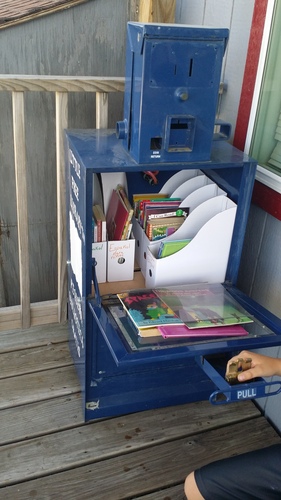
Riverside Resource Center – This Little Free Library, repurposed from a newspaper stand, serves a bilingual, low-income community in east Georgetown. Find it on the porch of the Riverside Resource Center at 7275 E. Highway 29.
The Playful Child – Located along the San Gabriel River Trail, this library was placed by The Playful Child, a Georgetown nonprofit founded in memory of Kade Damian and his joyful, playful spirit. 1306 Country Club Road
Rentsch Brewery – A family-friendly Little Free Library stocked with children’s books, coloring activities, and titles for adults. It’s the perfect spot to relax and read together in the beer garden while kids enjoy a soda and parents sample local brews. 2500 Northeast Inner Loop
Visit LittleFreeLibrary.org or download the Little Free Library app to discover even more book-sharing spots around Georgetown.
BUILD YOUR OWN LITTLE FREE LIBRARY
Inspired by the Little Free Library movement? Here’s how to start your own mini neighborhood library:
Identify a Location and Steward: Choose a spot where you can legally and safely install the library. The location should be visible and have regular foot traffic. You’ll also need at least one steward—a caretaker who helps promote the library and keeps it clean and welcoming.
Get a Library: You can build your own, hire someone locally to build one, or purchase a ready-made library through the Little Free Library website.
Register Your Library: Registration connects you to a network of support and benefits, including an official charter sign engraved with a unique charter number. Libraries purchased through the Little Free Library online store are automatically registered and include a charter sign.
Build Support: Spread the word in your community. Contact local media, tell friends and neighbors, and use social media to encourage participation. The more people who know about the library, the more it will thrive.
Add Your Library to the World Map: Celebrate with a grand opening—invite neighbors, hold a ribbon cutting, share snacks, and exchange books. Take photos and add your library to the Little Free Library world map online to connect with the wider network of stewards.
To learn more about Little Free Libraries, visit The Little Free Libraries website.