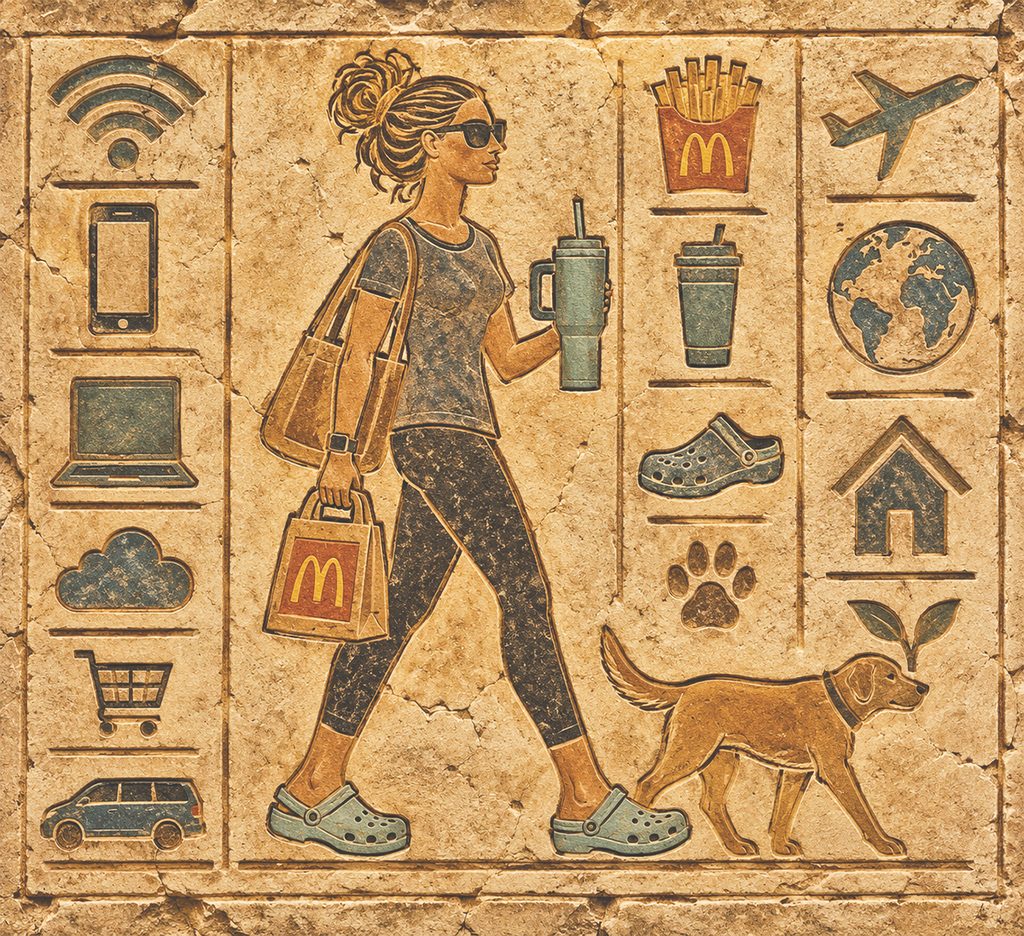
October traditionally seems to invite witches into the conversation. But rather than wade into the annual debate over costumes, candy, and spooky supernatural things, I thought we’d go Biblical about it. Poppy had this epiphany a few weeks ago when her chronological Bible reached Ezekiel — arguably one of the weirdest books in the Bible.
He is, after all, the prophet who opens with numinous four-faced, four-winged creatures traveling alongside wheels within wheels covered in eyes. And just when you think you’ve adjusted to his particular brand of WTH, chapter 13 introduces women practicing divination with mysterious things sewn onto their arms and equally mysterious coverings on their heads. My Bible helpfully footnotes these with some version of, “The meaning of the Hebrew word is unclear.” Which is unfortunate.
We 21st-century people aren’t super tolerant of unanswered questions. I have access to nearly the whole of accumulated human knowledge in my pocket, so when I want to know what an obscure Hebrew veil looked like, I expect someone, somewhere, to have an answer. Never mind that this particular detail has absolutely no bearing on salvation. Poppy is nothing if not a “but I still must know” kind of person.
Apparently everybody in the sixth century BC knew what Ezekiel was talking about, so nobody thought to leave instructions for those of us arriving 2,600 years later. For all we know, everyone in his little corner of Babylonia would flash a patronizing smile and explain, “Oh, that’s a flurbenknocker.”
Perhaps the length of one’s flurbenknocker indicated rank. Apprentice diviners wore a modest eight-inch model. Experienced sorceresses earned shoulder-length flurbenknockers, and Grand Mistress soul hunters trailed six feet of fabric behind them so they could demand significantly larger handfuls of barley.
For the record, there is absolutely no biblical or archaeological support for the Flurbenknocker Seniority and Barley Compensation Schedule. The barley, however, is real.
Ezekiel says these women profaned God for “handfuls of barley and scraps of bread.” Whatever their mysterious accessories were, apparently women could survive on divination fees and get paid in groceries.
I was thinking about this while working at my computer, producing intangible things so clients can pay me via an invisible signal that changes numbers in my bank account. I then use those numbers to purchase things like wireless data—which I also can’t see, eat, wear, or sleep under. Suddenly, getting paid in barley doesn’t seem so dumb.
In fact, imagine archaeologists 2,600 years from now trying to reconstruct my life from fragments of surviving text: “I spent all morning working in Photoshop and when the wi-fi went out, I put on my Skechers, filled my Yeti, and ordered DoorDash for lunch.” Everyone reading that sentence in 2026 knows exactly what happened.
But our future scholars might spend decades debating the ritual function of the “shop of photos,” if Skechers were new divination accessories, why a Himalayan Bigfoot might in fact be empty of anything, and whether DoorDash was some defunct sporting competition focused on food. Eventually someone would publish an uppity paper concluding: “The precise societal worship of wi-fi remains unclear.”
Poor Ezekiel never knew he needed footnotes. Neither do we, because we assume the people reading our words live in our world and understand our flurbenknockers.
Maybe that’s worth remembering when ancient Scripture sounds especially strange. These people weren’t just characters in a Bible story. They got dressed, went to work, bought food, used slang, followed trends, and understood cultural references nobody bothered to explain. Their world made perfect sense to them. And I’m pretty sure ours will eventually sound completely bonkers too.