
What Every Athlete Needs to Know
The anterior cruciate ligament, or ACL, is one of the most commonly injured knee structures, affecting athletes and active individuals of all ages. Whether you’re a competitive athlete, play recreational sports, or simply enjoy staying active, understanding ACL injuries helps you recognize warning signs and make informed treatment decisions.
What Is the ACL and Why Does It Matter?
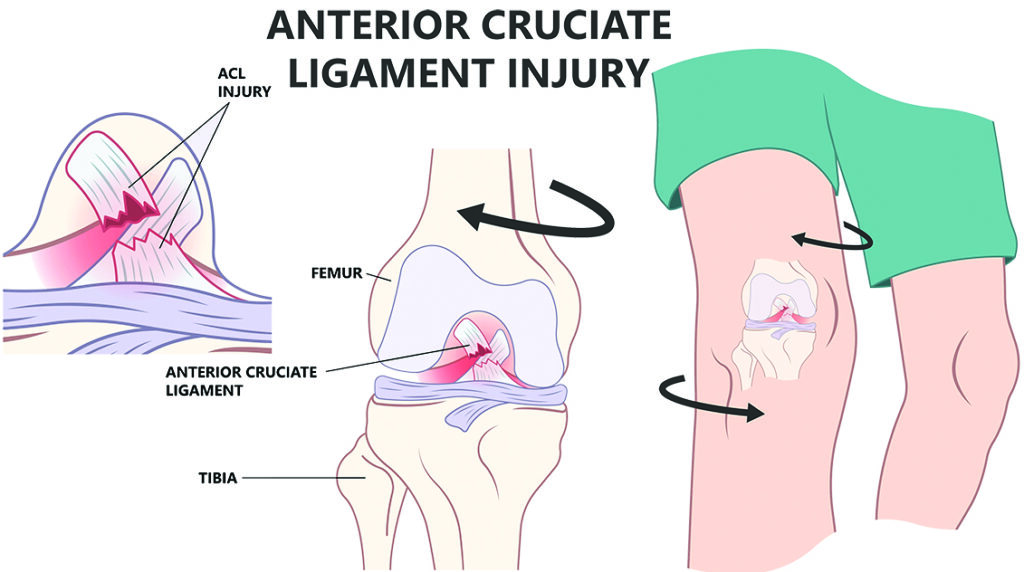
The ACL is one of four major ligaments that stabilize the knee joint. It runs diagonally through the center of the knee, preventing the shin bone from sliding forward and controlling rotation. When this ligament tears, many people describe hearing or feeling a “pop,” followed by swelling, instability, and difficulty bearing weight.
The Truth About ACL Injuries
A common misconception is that ACL tears only happen from direct contact, like a football tackle. In reality, most ACL injuries occur from non-contact mechanisms (Boden & Sheehan, 2022). These include sudden stops, direction changes, awkward landings, or pivoting movements. Sports with frequent cutting and jumping—such as soccer, basketball, volleyball, tennis, and skiing—carry higher risk.
ACL injuries aren’t limited to young athletes. Adults in recreational sports are also vulnerable, especially those who engage in intense activity without consistent year-round conditioning. Balancing work and family often means less weekday activity but demanding weekend play, increasing injury risk when muscles and joints aren’t prepared.
Can You Prevent ACL Injuries?
While not all ACL tears are preventable, research shows that specialized neuromuscular training can significantly reduce injury rates (Inclan et al., 2024). These programs include jump-landing drills, single-leg balance work, leg and hip strengthening, and movement patterns that teach proper knee alignment.
Simple adjustments matter. Land with knees bent and aligned over the feet, not caving inward. Strong quadriceps, hamstrings, and hip muscles improve knee control. Year-round conditioning keeps the body ready for activity.
Treatment Options Have Evolved
Not every ACL tear requires surgery. The decision depends on factors including age, activity level, instability, and personal goals (Brophy & Lowry, 2023). Some individuals with partial tears or lower activity demands can manage successfully with physical therapy and activity modification. Consulting an experienced orthopedic surgeon helps determine the best option.
For those who choose or require surgery, modern reconstruction techniques are minimally invasive and use improved grafts and rehab protocols, helping athletes return to activity sooner and more safely than ever.
When to Seek Evaluation
If you experience a knee injury with immediate swelling, a popping sensation, instability, or inability to continue your activity, seek evaluation promptly. Early diagnosis and treatment—surgical or non-surgical—lead to better outcomes. Waiting to see if symptoms improve can allow further damage to the meniscus and cartilage, increasing arthritis risk.
Understanding your knee health empowers you to stay active and make choices that support long-term joint strength, regardless of your age or athletic goals.
Austin Orthopedic Institute • Board-certified orthopedic surgeon specializing in sports medicine, joint reconstruction, and orthopedic trauma, with over 15 years of surgical expertise. • AustinOI.com ∙ 512-856-1000